Worcester Branch of the Worcestershire and Sherwood Foresters Regimental Association (WFRA) are holding a ceremony in Gheluvelt Park, Worcester (WR3 7AA) on Saturday 15 August to mark the anniversary of VJ Day, starting at 10.45am.
In attendance will be civil dignitaries and veterans, there will be the opportunity to lay wreaths and poppy crosses in remembrance of all who served in the Far East.
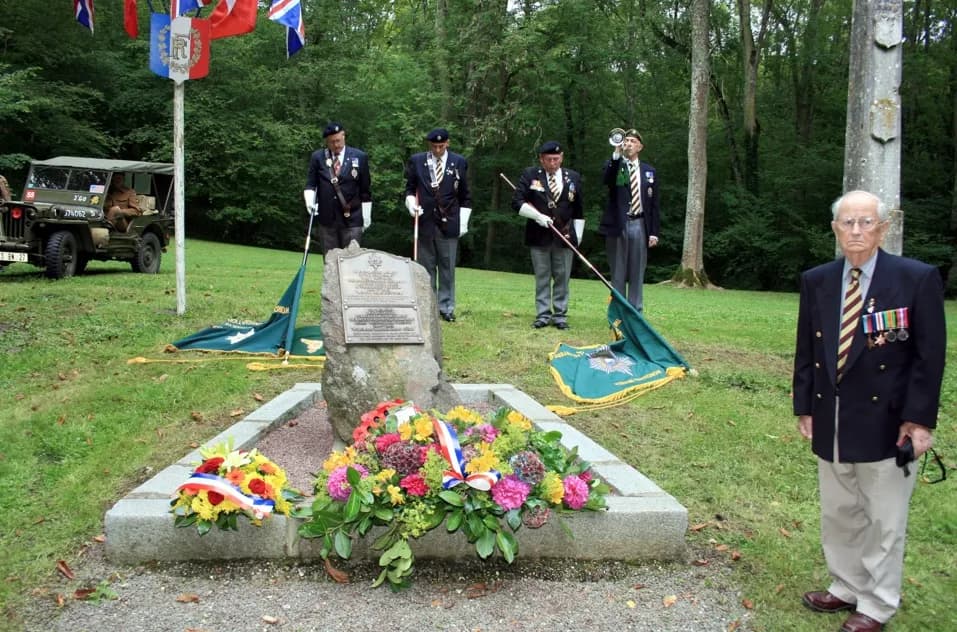
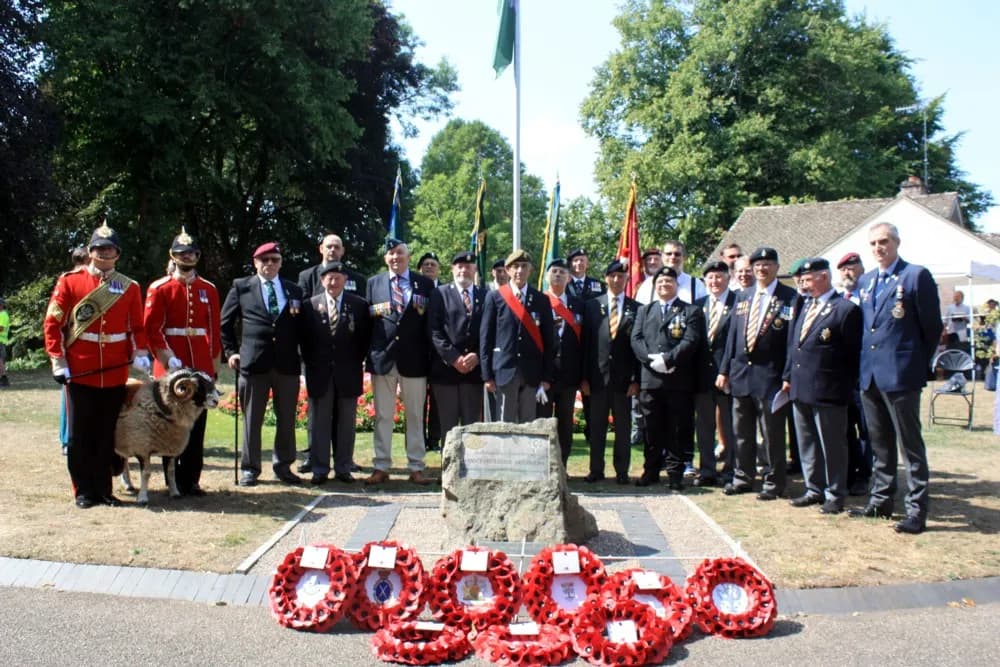
Last year on the same date it was the 80th anniversary of the end of the Second World War in the Far East. Worcester Branch WFRA held a large and well attended ceremony at the Worcestershire Regimental Stone in Gheluvelt Park, as well as civil dignitaries and veterans there was a large crowd of spectators there.
The ceremony was largely based on the service of the 2nd and 7th Battalions the Worcestershire Regiment that served in the Far East during WW2. After the ceremony there was several requests made to Worcester Branch WFRA that a ceremony should be held every year, especially as it was the previous generation of fathers and uncles that served there.
The harsh conditions of jungle warfare and being a prisoner of war ,for some, is still a close memory.
It is some years since this anniversary has been held every year in Worcester.
This year’s ceremony is not largely based on the Worcestershire Regiment, it is being held for the Tri Services (Navy, Army, Air Force) that served in the Far East and for members of the public who had family that served there and want to remember their loved ones on this anniversary.
The war in the Far East started with shock victories for the Japanese forces. After the attack on Pearl Harbour on the 7 December 1941 the Japanese made very quick conquests over a vast area of the Pacific and Far East countries.
On December 10, 1941, the modern British battleship HMS Prince of Wales and the battlecruiser HMS Repulse, comprising the core of British Force Z, were sunk within an hour of each other!
This happened off the coast of Malaya using land-based Japanese bombers and torpedo planes, resulting in 842 deaths and marking an historic turning point for air power over capital ships.
The Army also suffered great losses with the fall of Singapore to the Empire of Japan on February 15, 1942, making this the largest surrender of British-led forces in history.
Key aspects include Lieutenant General Arthur Percival's capitulation, the defeat of an 85,000-strong garrison by roughly 35,000 Japanese troops, and the shattering of the myth of invincibility for the British Empire in the Pacific.
The Royal Air Force (RAF) sustained losses in the Far East during the initial Japanese advances in 1941–1942 across Malaya, Singapore, and Burma. These Japanese advances resulted in the loss of Allied air superiority, numerous aircraft destroyed on the ground, and substantial numbers of personnel killed or captured as prisoners of war (POWs).
It took a few years for the allies in the Far East to get the upper hand and start winning back territory. The Battle of Kohima was a pivotal 1944 World War II engagement involving the British-Indian Army and the Imperial Japanese Army, characterized by the fierce defense of a ridge and the famous "Battle of the Tennis Court". Fought from April 4 to June 22, 1944 in Nagaland, Northeast India, it halted the Japanese U-Go offensive into India and marked a major turning point in the war in Asia.
Throughout this conflict the service personnel suffered very harsh conditions, in the jungle it was considered lucky if you survived the diseases let alone the fighting. Many service personnel became Prisoners of War who were treated, in most cases, very harshly with many working on the infamous railway of death.
After the euphoria of the end of hostilities in Europe in May 1945, very bitter fighting carried on in the Far East. The troops there recognised that the conflict being further away from the UK was not widely reported on as the conflict in Europe was, so much so that the troops fighting the Japanese called themselves 'The Forgotten Army'.
It took the use of two atomic bombs dropped on the Japanese homeland that brought about the end of WW2 in the Far East. It was thought that if the war had continued on to the Japanese homeland territories there would have been a greater loss of life than there had been lost to that point.
The British Navy, Army and Royal Air Force were heavily involved in the fighting throughout this conflict. It is their service and their sacrifices in the fight for the freedom of the countries affected by the war and on our behalf that is being remembered on the 15 August 2026 in Gheluvelt Park, at the Malayan Memorial Bench near the Worcestershire Regimental Stone. The ceremony is open to members of the public.